
Coffee brewing
Your complete guide to brewing perfect coffee at home
Key Takeaways
- Multiple brewing methods exist for different situations, flavor profiles and time frames
- The three most important factors are grind size, water temperature and brew time
- Espresso requires special equipment, while filter coffee and French press are easy to start with
- Fresh, whole coffee beans and proper storage give better flavor
- Precision in dosing dramatically improves consistency
Why brewing method matters
You have your coffee beans and want to make a good cup of coffee.
But how do you get the best flavor from them?
The answer lies in the brewing method.
The same beans can taste vastly different depending on how you brew them. A light roasted Ethiopian coffee can become a fruit bomb in a V60, while the same coffee becomes flat and boring in an old drip coffee maker.
The brewing method affects three things:
- Which flavors come forward
- How concentrated the coffee becomes
- How much acidity vs bitterness you get
In this guide we cover all popular brewing methods. You'll learn when each method makes sense, what equipment you need, and how to get consistent results.
What all brewing methods have in common
Regardless of whether you brew espresso or cold brew, four factors always come into play.
Grind size. Finer grind = larger surface area = faster extraction. Coarser grind = smaller surface area = slower extraction. Espresso uses finely ground coffee because water is only in contact with coffee for 25-30 seconds. French press uses coarsely ground coffee because coffee steeps for 4 minutes.
Water temperature. Hot water extracts faster than cold water. Most methods use 92-96°C. Too low = sour and thin. Too high = bitter and burnt flavor.
Brew time. Longer contact time = more extraction. Espresso: 25-30 seconds. Filter coffee: 3-4 minutes. French press: 4 minutes. Cold brew: 12-24 hours.
Ratio (coffee to water). More coffee = stronger flavor. Standard ratio: Espresso 1:2 (18g coffee to 36g shot), filter coffee 1:15 to 1:17 (60g coffee to 1 liter water), French press 1:15, pour over 1:16.
92-96°C
Optimal water temperature
1:15-1:17
Standard ratio
4
Factors controlling flavor
Espresso – intense and complex
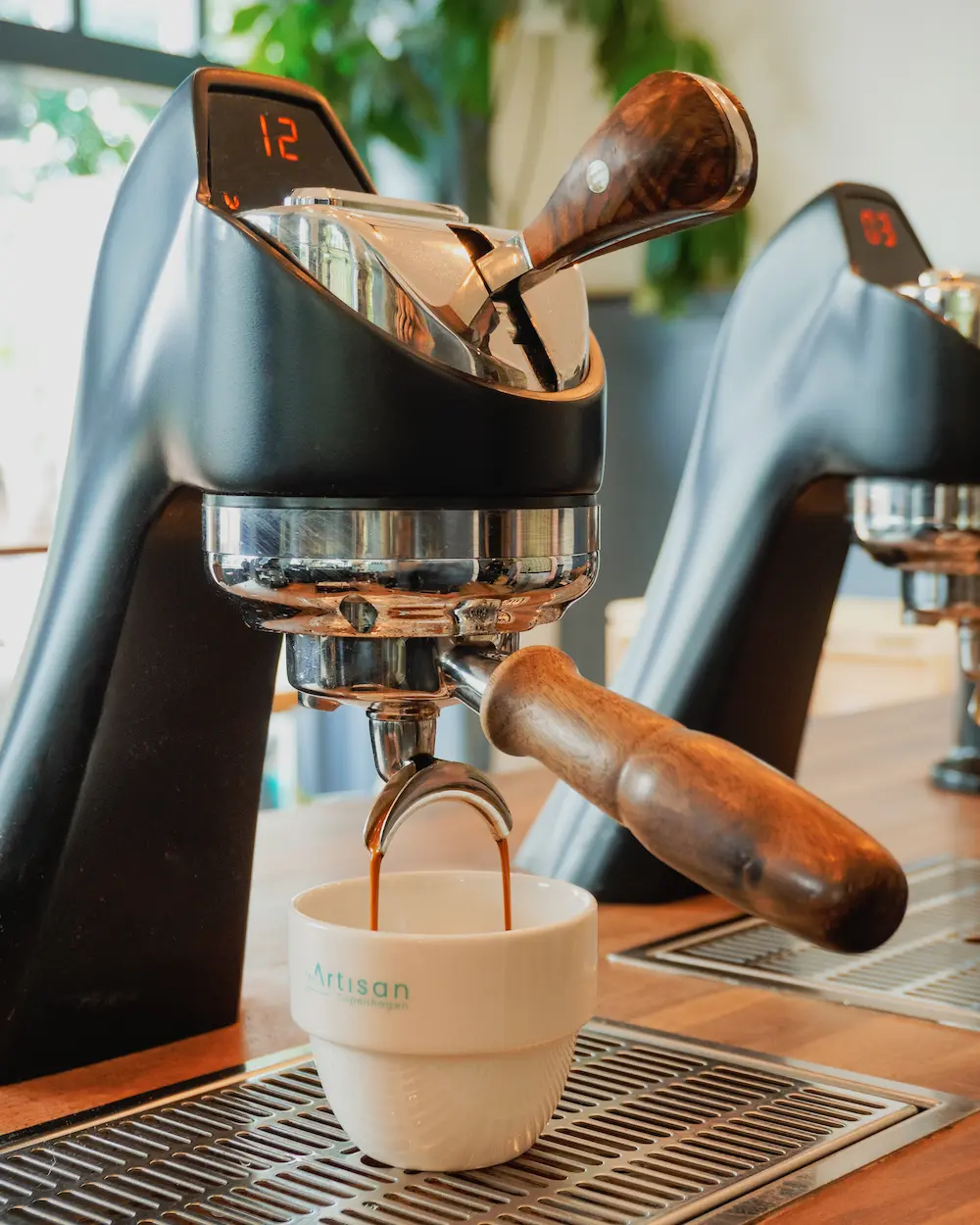
Espresso is the most concentrated brewing method. Water is pressed through finely ground coffee at 9 bars pressure in 25-30 seconds. The result is a concentrated shot of 25-40ml with crema on top.
What do you need? Espresso machine (semi-automatic or fully automatic), grinder with fine setting, tamper, kitchen scale (recommended).
Basic technique. Dose is typically 18-20g coffee for a double shot. Grind fine, but not too fine. If the shot runs under 20 seconds it's too coarse. Over 35 seconds it's too fine. Distribute the coffee evenly in the portafilter. Tamp with about 15kg pressure. Start the brew and follow the time. A good shot takes 25-30 seconds and yields 36-40g of liquid.
What can go wrong? Sour shot = too coarse grind or too short time. Bitter shot = too fine grind or too long time. No crema = old beans or wrong pressure.
We've written guides for different price ranges. See coffee machines or our guide to perfect espresso.
For the complete guide, read Espresso Guide – Brew Perfect Espresso.
Filter coffee – simple and clean
Filter coffee is the most common method in homes. Water drips through coffee in a paper filter. The filter holds back oils and particles, so you get a clean cup.
What do you need? Drip coffee maker, paper filters, grinder (medium-coarse setting), measuring cup or scale.
Basic technique. Standard dosing is 60g coffee to 1 liter water. That gives about 6 cups. Rinse the filter with hot water first. It removes the paper taste. Add coffee to the filter and start the machine. Brew time is typically 4-6 minutes. Stir the carafe after brewing for even flavor.
Tips for better filter coffee. Use fresh beans. Old beans give flat flavor. Grind yourself – pre-ground coffee loses flavor within days. Clean the machine monthly with vinegar or descaler. Use clean water. Water with high mineral content affects the taste.
Moccamaster is the gold standard for filter coffee. It maintains constant temperature and brews evenly. See coffee machines.
French press – full-bodied and oily
French press gives a full-bodied cup with more oil and body than filter coffee. The method is simple. Coffee and water are mixed, steep for 4 minutes, then pressed down with a plunger.
What do you need? French press, grinder (coarse setting), kettle for heating water, timer.
Basic technique. Use 60-70g coarsely ground coffee to 1 liter water. Heat water to 93-95°C. Pour half the water over the coffee and stir. Wait 30 seconds (blooming). Pour the rest of the water. Put the lid on without pressing down. Wait 4 minutes. Press down slowly. Pour the coffee immediately. If it sits in the carafe it becomes bitter.
Pros and cons. Pros: Cheap and simple, highlights coffee oils and body, no paper filter = less waste. Cons: Some coffee oils can be hard on the stomach, requires coarsely ground coffee (not all grinders can do it), risk of sediment in the cup.
Pour over – control and clarity
Pour over gives you full control over the brew. You pour water manually in spiral motions over the coffee. It takes practice, but delivers a clean and nuanced cup.
Popular methods: Hario V60, Chemex, Kalita Wave. They work slightly differently, but the principle is the same.
What do you need? Dripper (V60, Chemex or Kalita), paper filters, grinder (medium-fine to medium setting), gooseneck kettle, scale, timer.
Basic technique (V60). Use 15g coffee to 250ml water (1:16.7 ratio). Heat water to 93°C. Rinse the filter. Add coffee and make a well in the center. Start the timer. Pour 30-40g water over the coffee in circles. Wait 30-45 seconds (blooming). Pour water in slow circles until you reach 250g total. Target 2:30-3:00 minutes total time.
Why is it difficult? Pour speed affects the flavor. Too fast = under-extracted and sour. Too slow = over-extracted and bitter. Practice makes perfect.
Cold brew – smooth and sweet
Cold brew is made with cold water over 12-24 hours. The result is a sweet, smooth coffee without bitterness or acidity. That's because cold water doesn't extract the same sour and bitter compounds as hot water.
What do you need? Jar or pitcher with lid, coarsely ground coffee, cold water, grinder, filter or sieve.
Basic technique. Use 1:8 ratio (100g coffee to 800ml water) for concentrate. Dilute later with water or milk. Mix coffee and water in a jar. Stir well. Close the lid and refrigerate. Wait 16-20 hours. Strain through a fine filter. Store the concentrate in the fridge for up to 2 weeks.
Benefits. Less acidity = easier on the stomach. Smoother flavor = highlights sweetness. Keeps well = you can brew a large batch.
When to use cold brew? Summer coffee. Iced coffee with milk. Coffee-based drinks. If you don't like acidity.
AeroPress – versatility in your pocket
AeroPress is a hybrid between espresso and filter coffee. It's compact, cheap and makes fantastic coffee. Perfect for travel or small kitchens.
Two methods. Standard method: Coffee in the bottom, pour water on, press down. Inverted method: Turn AeroPress upside down, add coffee, pour water, flip and press. Inverted gives more control over steep time.
Basic technique. Use 15-18g medium-fine ground coffee. 200ml water at 85-90°C. Stir for 10 seconds. Steep for 1-2 minutes. Press slowly over 20-30 seconds.
Benefits. Cheap (~200 kr.). Easy to clean. Travel-friendly. Many variation possibilities.
Latte, cappuccino and flat white
Espresso is the base for milk-based drinks. The difference lies in the ratio between espresso and milk.
Cappuccino: 1/3 espresso, 1/3 steamed milk, 1/3 foam. Served in a 150-180ml cup.
Latte: 1/3 espresso, 2/3 steamed milk, thin layer of foam. Served in a 240ml glass.
Flat white: Double ristretto, microfoam. Served in a 150ml cup. Stronger coffee flavor than latte.
How do you make perfect milk foam? Use cold, fresh milk (whole milk preferred). Position the steam wand just under the surface. Let the milk rotate. Heat to 60-65°C. Tap the pitcher on the counter to remove large bubbles. Pour the milk into espresso in a steady stream.
Tip
Want to learn latte art? Start with a simple heart. Hold the cup at an angle, pour from height first, then lower the pitcher and push through at the end.
Which brewing method suits you?
It depends on three things: How much time do you have? What flavor do you want? How much do you want to invest?
| Method | Time | Difficulty | Price (equipment) | Flavor |
|---|---|---|---|---|
| Espresso | 2-3 min | High | 3,000-15,000 kr. | Concentrated, crema, complex |
| Filter coffee | 5-6 min | Low | 300-3,000 kr. | Clean, bright, easy to drink |
| French press | 4-5 min | Low | 150-500 kr. | Full-bodied, oily, body |
| Pour over | 3-4 min | Medium | 200-1,000 kr. | Clean, nuanced, control |
| Cold brew | 16-24 hours | Low | 0-300 kr. | Smooth, sweet, no acidity |
| AeroPress | 2-3 min | Low-medium | 200-300 kr. | Versatile, clean, strong |
Our recommendation for beginners. Start with filter coffee or French press. They're easy to learn and forgiving. Once you have dosing and basic technique down, you can explore pour over or espresso.
Common mistakes and how to avoid them
Mistake 1: Old beans. Coffee is a fresh product. After 2-3 weeks aromas begin to disappear. Buy smaller quantities more often. Store beans in an airtight container away from light.
Mistake 2: Wrong grind size. Too fine = bitter and over-extracted. Too coarse = sour and thin. Adjust the grinder for your brewing method.
Mistake 3: Poor water quality. Water makes up 98% of your coffee. If the water tastes bad, the coffee tastes bad. Use filtered water if your tap water has high mineral content.
Mistake 4: Wrong water temperature. Too cold water doesn't extract enough. Too hot water burns the coffee. 92-96°C is the sweet spot for most methods.
Mistake 5: No consistency. Precision gives better coffee. Use a scale instead of spoons. Time the brew. Note what works.
Warning
Never pour boiling water directly onto coffee. It burns it and gives bitter taste. Let the water cool 30 seconds after boiling point.
Frequently asked questions about coffee brewing
What is the easiest brewing method for beginners?
Filter coffee is the easiest method. You just add coffee to the filter, pour water in the tank and start the machine. French press is also easy and only requires a carafe, coffee and boiling water.
How does grind size affect flavor?
Finer grinding gives faster extraction and stronger flavor. Too fine grinding can however make the coffee bitter. Coarser grinding gives slower extraction and milder flavor, but too coarse grinding gives sour, thin coffee. Each brewing method requires its own grind size.
Do I need an expensive grinder to make good coffee?
No, but a grinder helps. Pre-ground coffee loses flavor within days. A simple hand grinder for 300-500 kr. gives significantly better coffee than pre-ground. If you want to brew espresso, you need to invest in a better electric grinder.
What is the best water temperature for coffee?
92-96°C is optimal for most brewing methods. Boiling water (100°C) burns the coffee and gives bitter taste. Under 90°C the coffee becomes sour and thin. Let the water cool 30-60 seconds after it boils.
How long does brewed coffee keep?
Filter coffee keeps best for 30-60 minutes on a warming plate. After that the flavor starts to get burnt. Cold brew keeps for up to 2 weeks in the fridge. Espresso should be drunk immediately.
Can I brew espresso without a machine?
No, true espresso requires 9 bars pressure that only an espresso machine can deliver. AeroPress makes strong coffee, but it's not espresso. Moka pot (Italian coffee maker) makes something similar, but with lower pressure.
What is the difference between pour over and filter coffee?
Pour over is manual filter coffee where you pour the water yourself in controlled motions. A drip coffee maker does it automatically. Pour over gives more control and can highlight complex flavor profiles better.
Affiliate disclosure: Some links in this article are affiliate links. This means we may receive a small commission if you purchase via the link — at no extra cost to you. We only recommend products we have tested and trust.
Was this guide helpful?