
Specialty coffee EN
From cherry to cup: Understand what makes specialty coffee special and why quality begins at the farm
Key Takeaways
- Specialty coffee must score at least 80 points out of 100 on the SCA scale to qualify
- Only 5-10% of the world's coffee harvest meets the specialty standard
- Single origin means coffee from one farm or region with traceable provenance
- Third wave coffee treats coffee as craft – not just a commodity
- Freshness is crucial: Specialty coffee loses flavor 4-6 weeks after roasting
What is specialty coffee?
Specialty coffee isn't just a marketing term.
It's an industry-standard classification for coffee that scores at least 80 points out of 100 on the Specialty Coffee Association's (SCA) quality scale.
Only 5-10% of the world's total coffee harvest reaches this standard.
To qualify, beans must be free of primary defects such as mold, underdeveloped or insect-damaged. They may have at most five secondary defects per 350g sample.
In addition, the flavor must be distinct and complex. That means clear notes, good sweetness, balanced acidity and a clean finish.
Regular supermarket coffee typically scores 65-75 points. It lacks the depth and characteristic flavor profile that specialty coffee has.
SCA scoring system
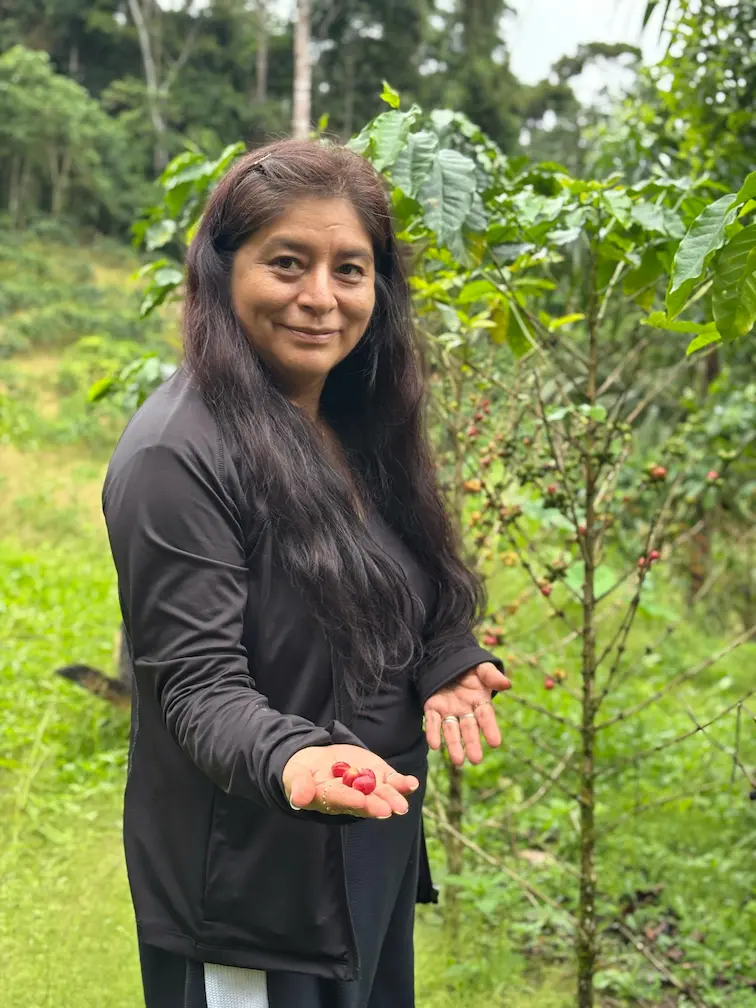
The Specialty Coffee Association uses certified Q Graders to evaluate coffee. A Q Grader is a professionally trained taster who has passed an intensive exam.
They evaluate coffee on 10 specific categories: aroma, flavor, aftertaste, acidity, body, balance, uniformity, clean cup, sweetness and overall impression. Each category can score up to 10 points.
The process is called cupping and follows a strict protocol. Beans are ground, poured into identical cups and covered with water at exactly 93°C. After four minutes the crust of coffee grounds on the surface is broken.
The Q Grader smells intensely at the aroma in this moment. Then the coffee is tasted by slurping it forcefully into the mouth to distribute it across the palate.
80+
Minimum SCA score for specialty coffee
5-10%
Share of world harvest that qualifies
10
Flavor categories in the assessment
Single origin vs blend
Single origin means the coffee comes from one specific farm, cooperative or region. It gives full traceability. You know exactly where the beans were grown, who harvested them and how they were processed.
Single origin coffee often has a distinct flavor profile that reflects the terroir. That means soil type, altitude, climate and processing method. A coffee from Ethiopia tastes different from one from Colombia – even at the same roast level.
Blends are mixtures of beans from different origins. The advantage is consistency. Roasters can adjust the ratio between origins to achieve the same flavor year after year. It's especially popular for espresso, where balanced sweetness, body and crema matter more than unique notes.
Specialty coffee can be both single origin and blend. The key is that every single bean in the blend scores 80+ points.
| Attribute | Single Origin | Blend |
|---|---|---|
| Origin | One farm or region | Multiple regions combined |
| Flavor profile | Distinct, unique, terroir-driven | Balanced, consistent |
| Traceability | Full transparency | Varies by product |
| Variation | Can vary season to season | Designed for consistency |
| Best for | Filter coffee, pour over | Espresso, milk-based drinks |
Third wave coffee
The coffee industry has gone through three waves. First wave was instant coffee and mass production after World War II. Second wave introduced espresso machines and chains like Starbucks from the 1970s.
Third wave coffee started in the early 2000s. It's about treating coffee as craft. Not as a commodity, but as an agricultural product with complexity on par with wine.
Third wave roasters focus on: direct trade with coffee farmers, light to medium roasts that preserve the bean's natural flavor, careful extraction through methods like pour over and Aeropress, transparency about origin and price, and consumer education.
Specialty coffee and third wave coffee aren't the same. But they overlap. Most third wave roasters work exclusively with specialty coffee. And the philosophy behind both is the same: quality over quantity.

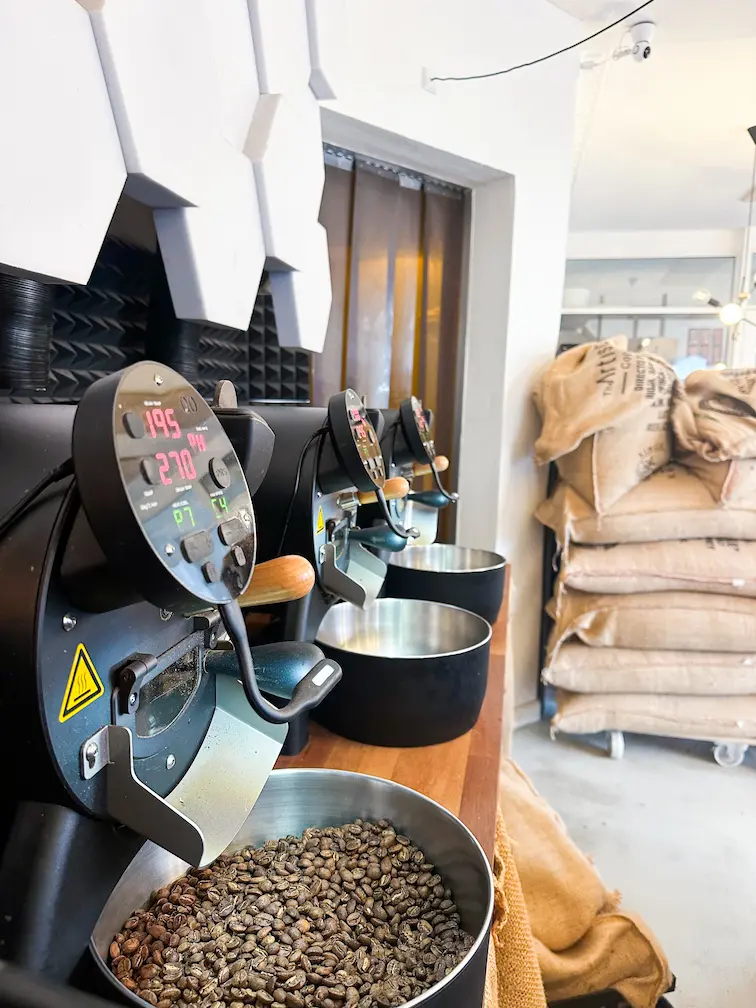
The Artisan
Coffee roastery, Copenhagen
"We only roast specialty coffee because we believe farmers deserve to be paid fairly for extraordinary work. When you buy specialty coffee, you're supporting directly the producers who invest in quality over volume."
Processing methods
The processing method significantly affects flavor. It's the process between harvest and drying where the fruit layer is removed from the bean. There are three main methods.
Washed: The beans are removed from the cherry mechanically. They're then fermented in water tanks to remove the last gel-like layer. Then they're dried. The result is a clean, clear flavor with pronounced acidity and floral notes.
Natural (dry): The whole cherry is dried with the bean still inside. The fruit ferments slowly during drying. This gives a full, fruity flavor with deep sweetness. Often with berry or tropical notes.
Honey (pulped natural): A hybrid. The skin is removed but some of the fruit layer is left on the bean during drying. It gives a middle ground between washed and natural. Sweeter than washed, but cleaner than natural.
Good to know
Anaerobic fermentation is a newer method where beans ferment in sealed tanks without oxygen. It creates wild, complex flavor profiles with notes like pineapple, mango and wine. Several of our specialty coffee beans use this technique.
Freshness matters
Specialty coffee is a fresh product. After roasting, the beans begin to release CO2 and lose aromas. The first 3-5 days are the resting period. During this time the beans are too fresh to extract correctly.
The next 2-4 weeks are the peak window. Here the flavor is most balanced and complex. After 4-6 weeks quality begins to decline. The aromas fade, the acidity flattens, and the coffee's unique character vanishes.
After three months, even specialty coffee becomes a shadow of itself. That's why we roast to order. You receive coffee that's at most 3 days old. And you can choose whether you want it with 3 or 12 days of rest.
Warning
Supermarket coffee is often 6-12 months old when you buy it. The roast date is rarely printed on the package. That's why even "specialty coffee" from the supermarket tastes flat compared to freshly roasted.
What does specialty coffee cost?
Specialty coffee is more expensive than supermarket coffee. But there are good reasons. Specialty coffee farmers are paid 2-3 times the Fairtrade minimum. They invest in better cultivation, selective hand-picking and careful processing.
Shipping small batches also costs more per kilo than bulk containers. And micro-roasters like us roast in small batches with focus on quality – not volume.
A bag of specialty coffee typically costs 120-180 kr. for 250g. That's 10-15 kr. per cup. Compared to a takeaway coffee at 40-50 kr. it's still cheaper. And the flavor is incomparable.
Frequently asked questions
How much must coffee score to be specialty coffee?
Coffee must score at least 80 points out of 100 on the SCA's (Specialty Coffee Association) quality scale to qualify as specialty coffee. Only 5-10% of the world's coffee harvest meets this standard. The score is given by certified Q Graders who evaluate the coffee on 10 different categories including flavor, aroma, acidity, body and aftertaste.
What's the difference between single origin and blend?
Single origin coffee comes from one specific farm or region, giving full traceability and a distinct flavor profile. Blends are mixtures of beans from multiple origins, designed for consistency and balanced flavor. Both can be specialty coffee, as long as every single bean scores 80+ points. Single origin often works best for filter coffee, while blends are popular for espresso.
How long does specialty coffee stay fresh?
Specialty coffee is best 2-4 weeks after roasting. The first 3-5 days are the resting period when the beans release CO2. Then comes the peak window when the flavor is most complex. After 4-6 weeks the aromas begin to fade. After three months even specialty coffee has lost most of its character. That's why roast date is crucial – supermarket coffee is often 6-12 months old.
What is third wave coffee?
Third wave coffee is a movement that started in the early 2000s, in which coffee is treated as craft rather than a commodity. It focuses on direct trade with farmers, light to medium roasts that preserve natural flavor, careful extraction, transparency about origin and consumer education. Most third wave roasters work exclusively with specialty coffee.
How does processing affect flavor?
The processing method has a major influence on flavor. Washed coffee gives clean, clear flavor with pronounced acidity and floral notes. Natural (dry) process gives full, fruity flavor with deep sweetness and berry notes. Honey process is a hybrid that combines sweetness with purity. Anaerobic fermentation creates complex, wild flavor profiles with tropical notes.
Affiliate disclosure: Some links in this article are affiliate links. This means we may receive a small commission if you purchase through the link – at no extra cost to you. We only recommend products we've tested and trust.
Was this guide helpful?
Sources
- Specialty Coffee Association – Coffee Standards and Cupping Protocols
- Coffee Quality Institute – Q Grader Certification Program
- Rao, Scott – "The Coffee Roaster's Companion" (2014)
- Hoffmann, James – "The World Atlas of Coffee" (2018)